Buying an electric vehicle? Charging at home is the most convenient way to keep it ready to go. Here’s what to know before you install a home charger, from charging levels to permits.
Level 1 vs. Level 2 Charging
Level 1 uses a standard 120V outlet and adds only a few miles of range per hour. Level 2 uses a 240V circuit and can fully charge most EVs overnight. For most drivers, Level 2 is the way to go.
Level 1 can work if you drive short distances and the car sits for long stretches. Most people who rely on their EV every day find it too slow, especially in cold weather. A Level 2 charger needs a dedicated circuit installed by an electrician, which is where planning comes in.
Does Your Panel Have Room?
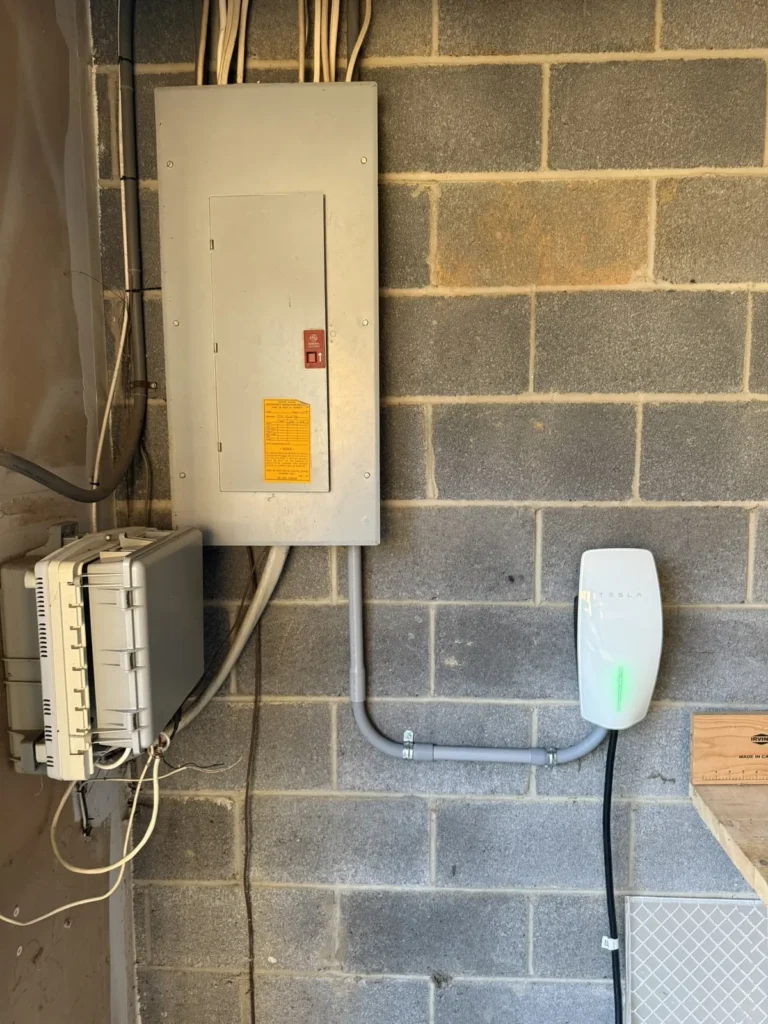
A Level 2 charger usually needs a dedicated 40 to 60 amp circuit. An electrician will do a load calculation to see if your panel can handle it, or whether you need a panel or service upgrade.
The load calculation looks at everything your home already uses, including heating and cooling, the water heater, the range and the dryer, and then adds the charger. Older homes with smaller services or full panels sometimes need an upgrade first. Some homes can use load management options that limit charging when other big appliances are running. If an upgrade is needed, our Panel Upgrades page explains what is involved.
Where Should the Charger Go?
Most chargers go in the garage or on an outside wall near the driveway. The closer to your panel, the simpler the install.
A few things to think about when choosing a spot:
- Your car’s charge port. Check which side it is on and how you usually park.
- Cable reach. Make sure the cable can reach without stretching across walkways.
- Weather. Outdoor chargers need to be rated for outdoor use and mounted properly.
- Future needs. If a second EV may be coming, it is worth planning for it now.
If you park outside, think about how the cable will be stored when it is not in use. A wall-mounted holster or hook keeps it off the ground and out of the way of snow shovels, lawn equipment and foot traffic. It also helps the cable last longer and keeps your driveway or garage floor clear and safe.
Hardwired Charger or Plug-In Outlet?
Level 2 chargers can be hardwired or plugged into a 240V outlet. Both can work well when installed correctly. Hardwiring keeps the connection permanent, while a plug-in setup makes it easier to swap chargers later. Either way, the circuit, wire size and protection need to match the charger’s requirements and code. We can help you decide which fits your charger and your garage.
Permits and Inspections
EV charger installs usually require a permit and inspection. A licensed electrician takes care of this for you. The inspection confirms the circuit, wiring and mounting are done right, which protects your home and your vehicle.
Why Choose a Licensed Master Electrician
An EV charger is one of the largest continuous loads in a home, and it runs for hours at a time. That makes proper sizing and solid connections important. John Palmer is a licensed Maryland Master Electrician (#12441) and has worked in the trade since 1978. JJ Palmer Electrical Service installs EV chargers across Baltimore and Howard Counties, including Catonsville, Ellicott City and Columbia. Learn more on our EV Charger Installations page.
Frequently Asked Questions
Can I use a regular outlet to charge my EV?
You can use a standard 120V outlet for Level 1 charging, but it is slow. It should be in good condition and ideally on a circuit that isn’t shared with other heavy loads. For daily driving, most owners move to Level 2.
Will I need a panel upgrade for an EV charger?
Not always. Many homes have enough capacity. A load calculation shows whether your current panel can support the charger or whether an upgrade or load management option makes sense.
Should I buy the charger before the electrician visits?
It helps to talk with us first. The charger’s amp rating and installation type affect the circuit we install, so knowing your options before you buy can save you trouble.
Related: see our EV charger installation and panel upgrade services, check our service area, or request a free estimate.
Ready to Charge at Home?
JJ Palmer Electrical Service installs EV chargers throughout Catonsville and the Baltimore area. Call (443) 986-1000, Monday to Friday, 9 to 5, or contact us online to schedule an estimate.